
The Polaris RANGER XD 1500 raised the bar for utility UTVs when it was introduced, combining a powerful 1,498cc three-cylinder engine, an automotive-inspired drivetrain, a premium NorthStar cab, and class-leading work capabilities into one impressive package. It quickly established itself as one of the most refined utility UTVs we’ve ever tested.
Now Polaris has introduced a version aimed at a more specific customer.

Polaris RANGER XD 1500 Mountaineer Edition Comes with Exclusive “Mountaineer Edition” Graphics
The RANGER XD 1500 Mountaineer Edition isn’t about flashy graphics or appearance packages. Instead, Polaris focused on making meaningful changes for customers who spend their time working and recreating in the mountains. Two key updates separate it from the standard RANGER XD 1500:
- A lower 3.73:1 final drive ratio (approximately 20 percent lower than the standard model) for improved climbing performance and low-speed control.
- Factory-tinted windows to help reduce solar heat inside the cab.
- Exclusive “Mountaineer Edition” Graphics
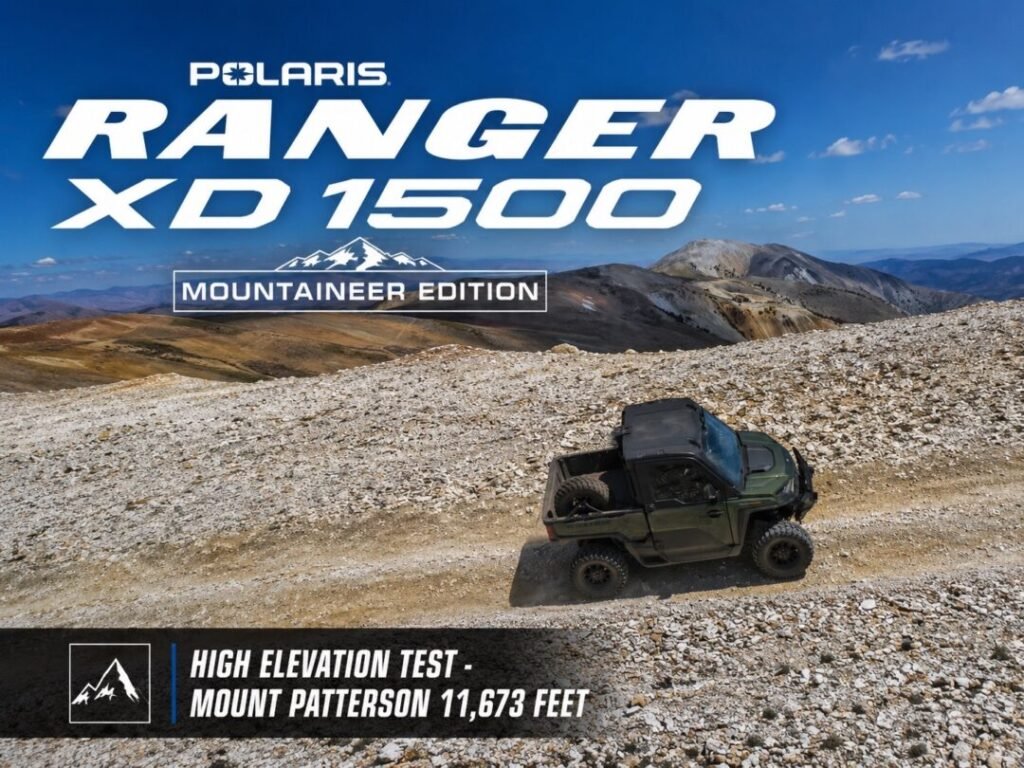
To find out whether those changes make a real difference, we headed into California’s Eastern Sierra, climbing from approximately 5,500 feet near Walker, California, to the 11,673-foot summit of Mount Patterson in just over 20 miles. Along the way we encountered steep grades, loose shale, rocky switchbacks, and increasingly thin air—the exact conditions this machine was designed to tackle.

Too of Mount Patterson – 11,673 feet
The Destination: Mount Patterson
Our test route took us to the summit of Mount Patterson, the highest peak in California’s Sweetwater Range at 11,673 feet.
Located within the Toiyabe National Forest, the Sweetwater Range stretches between U.S. Highway 395 in California and Nevada Highway 338—better known as Sweetwater Road. The route climbs quickly from the valley floor through sagebrush-covered foothills, into pine forests, and eventually above the timberline into a rugged alpine landscape that feels worlds away from the desert below.
The summit rewards the climb with spectacular 360-degree views across the Eastern Sierra, the Sweetwater Mountains, and western Nevada. On a clear day, it’s one of those places where you can simply shut the engine off and take in the scenery.
But Mount Patterson offers more than just incredible views.
The alpine environment above timberline is home to a surprising variety of rare plant species that have adapted to one of the harshest growing environments in the West. The rocky alpine terrain—known as fellfields—may appear barren at first glance, but these windswept slopes support specialized plant communities capable of surviving extreme temperatures, intense sunlight, and a very short growing season.
The Sweetwater Range is also unique in western North America because of the geologic processes that shaped it. Those forces created the rugged mountains, loose shale climbs, and rocky alpine terrain that make this area such an exceptional destination for off-road exploration.
It also happens to be the perfect place to evaluate a machine designed specifically for high-elevation travel.
With more than 6,000 feet of elevation gain in just over 20 miles, steep grades, loose shale, and increasingly thin air, the climb to Mount Patterson presents exactly the kind of challenge the RANGER XD 1500 Mountaineer Edition was built to tackle.
Lower Gearing Makes a Noticeable Difference
The Mountaineer Edition’s biggest mechanical change is its 3.73:1 final drive ratio, replacing the standard 3.07:1 gearing.
On paper, that translates to approximately 20 percent more torque multiplication at the wheels. Behind the wheel, the difference became obvious during the steepest sections near the summit.
Unlike many utility UTVs, the RANGER XD 1500 doesn’t feature a traditional low-range gear in its transmission. Instead, the final drive ratio determines how aggressively the vehicle delivers torque at lower speeds.

The last 700 feet to the summit of Mount Patterson is very steep with loose rocks
In the steep, loose shale near the top of Mount Patterson, the lower gearing simply felt right.
Rather than requiring extra throttle to keep the vehicle moving, the Mountaineer Edition climbed smoothly and predictably with excellent throttle modulation. The lower gearing made it easier to maintain traction while reducing wheelspin, giving the driver more confidence on technical climbs where precise control matters.
If your adventures regularly include steep mountain roads, rocky climbs, mining roads, or high-elevation trails, the Mountaineer Edition’s gearing is more than just a specification—it fundamentally changes how the RANGER XD 1500 performs in those environments.
The Tradeoff: Lower Speed for Better Control
Every gearing change comes with a compromise.
While the 3.73 gears noticeably improve climbing performance, they also reduce the vehicle’s top speed. During our testing, the Mountaineer Edition topped out at approximately 51 mph.
Whether that’s a drawback depends entirely on how you plan to use the vehicle.
For ranch work, hunting, mountain trails, and technical terrain, you’ll likely appreciate the improved low-speed control far more than you’ll miss the additional speed.
However, riders who frequently travel long distances on faster forest roads or open desert terrain may find the lower top speed harder to accept. That’s one of the realities of a drivetrain without a dedicated low-range gear—one final drive ratio has to balance slow-speed technical capability with higher-speed cruising.
There may be an aftermarket solution for owners who want the best of both worlds. Evolution Powersports offers an ECU calibration for the RANGER XD 1500 that includes a higher speed limiter—reportedly increasing top speed by approximately 20 mph—along with additional performance enhancements. While we didn’t have the opportunity to test that calibration, it may be worth considering for buyers who like the lower gearing but don’t want to give up higher-speed cruising.

A factory-installed window tint keeps the cab more comfortable when you’re riding at elevation.
Factory Tint Is a Nice Touch
The Mountaineer Edition’s second exclusive feature is much simpler than the gearing change, but it’s one owners will appreciate every time they climb into the cab.
The factory-tinted windows help reduce glare and should help keep the interior cooler during hot summer days. While we didn’t have a standard RANGER XD 1500 available for a direct comparison, reducing the amount of solar heat entering an enclosed cab is always a welcome addition.
Beyond the practical benefits, the darker glass also gives the Mountaineer Edition a more premium appearance. It’s a subtle change, but one that complements the upscale look of the NorthStar cab.
The Best Cab Polaris Has Ever Built
While the Mountaineer Edition adds mountain-specific upgrades, the biggest reason to consider this machine is the RANGER XD 1500 platform itself.
Quite simply, this is the most refined cab Polaris has ever put into a utility UTV.
From the moment you close the door, the XD 1500 feels more like a compact pickup than a traditional side-by-side. The doors shut with a reassuring solidity, interior materials feel more substantial, and the overall fit and finish are a significant step forward compared to previous RANGER models.
One area that particularly impressed us was dust sealing.
After testing numerous enclosed HVAC-equipped UTVs over the years, the RANGER XD 1500 has one of the best-sealed cabs we’ve experienced. Even in dry, dusty conditions, remarkably little dust found its way inside, making long days behind the wheel much more enjoyable.

The automotive-inspired interior of the RANGER XD 1500
HVAC Done Right
Polaris also deserves credit for making meaningful improvements to the heating and air conditioning system.
Compared to previous Polaris HVAC-equipped vehicles we’ve tested, the XD 1500’s climate control system performs noticeably better. Airflow from the vents is stronger, outlet temperatures are colder, and the addition of a recirculation mode allows the system to cool already-conditioned cabin air rather than continually pulling in hot outside air.
The result is a cab that cools down faster and maintains a comfortable temperature more efficiently, especially during long summer rides.
Combined with the Mountaineer Edition’s factory tint and excellent dust sealing, the XD 1500 offers one of the most comfortable enclosed cabs currently available in the utility UTV market.
Suspension: Good, But Worth Upgrading
The factory suspension does a respectable job for the RANGER XD 1500’s intended mission.
For everyday work, trail riding, and moderate speeds, the emulsion shocks provide a comfortable ride while keeping the heavy machine composed over most terrain.
As speeds increase and the terrain becomes rougher, however, the limitations begin to show.
During our testing, I was able to bottom out the front suspension several times in larger G-outs. Those harder impacts highlighted the biggest compromise of the stock suspension package. While the factory shocks work well for general-purpose use, they simply aren’t designed for sustained higher-speed driving through rough terrain.
To be fair, that’s true of most utility UTVs. Manufacturers typically equip them with basic emulsion shocks that prioritize durability, simplicity, and load-carrying capability over high-performance damping.
If I were purchasing a RANGER XD 1500, the suspension would be one of my first upgrades.

SDI TERRAIN MASTER 2.1 SHOCKS
Suspension Direct, Inc.‘s Terrain Master 2.1 shocks would provide a substantial improvement in damping control, bottoming resistance, and overall ride quality while maintaining the vehicle’s utility-focused personality.

E-CLIK ACTIVE PRO FOR POLARIS RANGER XD 1500
For owners looking for the ultimate setup, SDi’s E-CLIK Active Suspension would take refinement to another level by automatically adjusting damping to changing terrain conditions.

Polaris RANGER XD 1500 with Mid-Travel Suspension
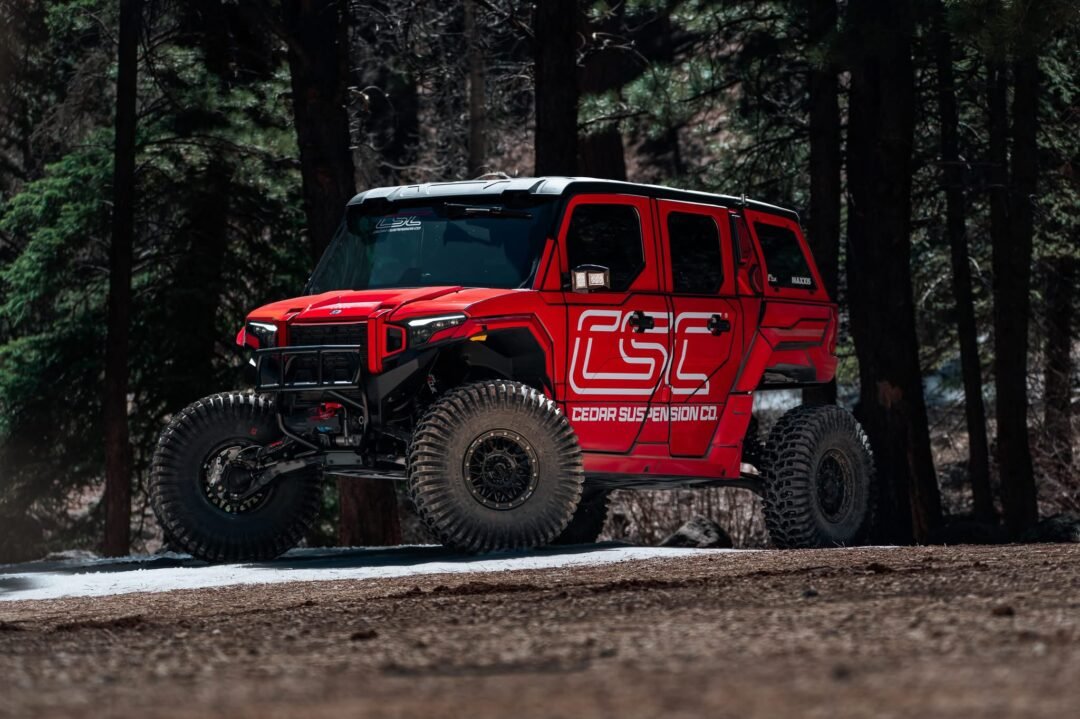
If I wanted to push the RANGER XD 1500 even further into the recreation category, I’d pair either SDi shock package with a mid-travel suspension system from HCR Racing or Cedar Suspension Co. That combination would significantly improve the vehicle’s ability to absorb rough terrain while giving it a much sportier feel without sacrificing its utility capabilities.
Why We Chose This Test
Rather than evaluating the Mountaineer Edition on flat trails or at lower elevations, we tested it in the environment it was specifically engineered for. The climb from Walker to the 11,673-foot summit of Mount Patterson combines over 6,100 feet of elevation gain, loose shale, rocky climbs, and alpine terrain—making it an ideal proving ground for Polaris’ mountain-focused gearing.
Final Thoughts
After climbing from approximately 5,500 feet near Walker, California, to the 11,673-foot summit of Mount Patterson, one thing became clear: the Mountaineer Edition isn’t simply a special edition package.
The lower 3.73 gearing genuinely improves the driving experience in steep, high-elevation terrain. The vehicle climbs more confidently, throttle control becomes more precise, and loose, technical sections are easier to navigate. For riders who regularly venture into the mountains, those are meaningful improvements.
The tradeoff is a lower top speed, and whether that’s acceptable depends entirely on where and how you ride. If your days are spent exploring mining roads, climbing rocky trails, or working in mountainous terrain, it’s a compromise that makes sense. If your riding consists primarily of fast forest roads or wide-open desert, the standard gearing may be a better fit.
Beyond the Mountaineer-specific upgrades, the RANGER XD 1500 itself continues to impress. Its premium cab, exceptional HVAC system, outstanding dust sealing, and automotive-like refinement make it one of the most comfortable utility UTVs on the market.
There are certainly areas where aftermarket upgrades—particularly suspension—can unlock even more capability. But even in stock form, the RANGER XD 1500 is an exceptionally well-engineered platform.
The Mountaineer Edition doesn’t try to be everything for everyone. Instead, it targets a specific type of owner: someone who lives, works, or recreates in the mountains. For those buyers, Polaris’ changes aren’t just marketing—they’re functional improvements that make an already excellent utility UTV even better suited to the terrain it was built to conquer.
If your idea of adventure means climbing above the timberline, tackling loose alpine trails, and enjoying breathtaking views from places like Mount Patterson, the Polaris RANGER XD 1500 Mountaineer Edition is exactly the kind of machine Polaris set out to build—and after spending a day taking it to nearly 12,000 feet, I’d say they succeeded.